
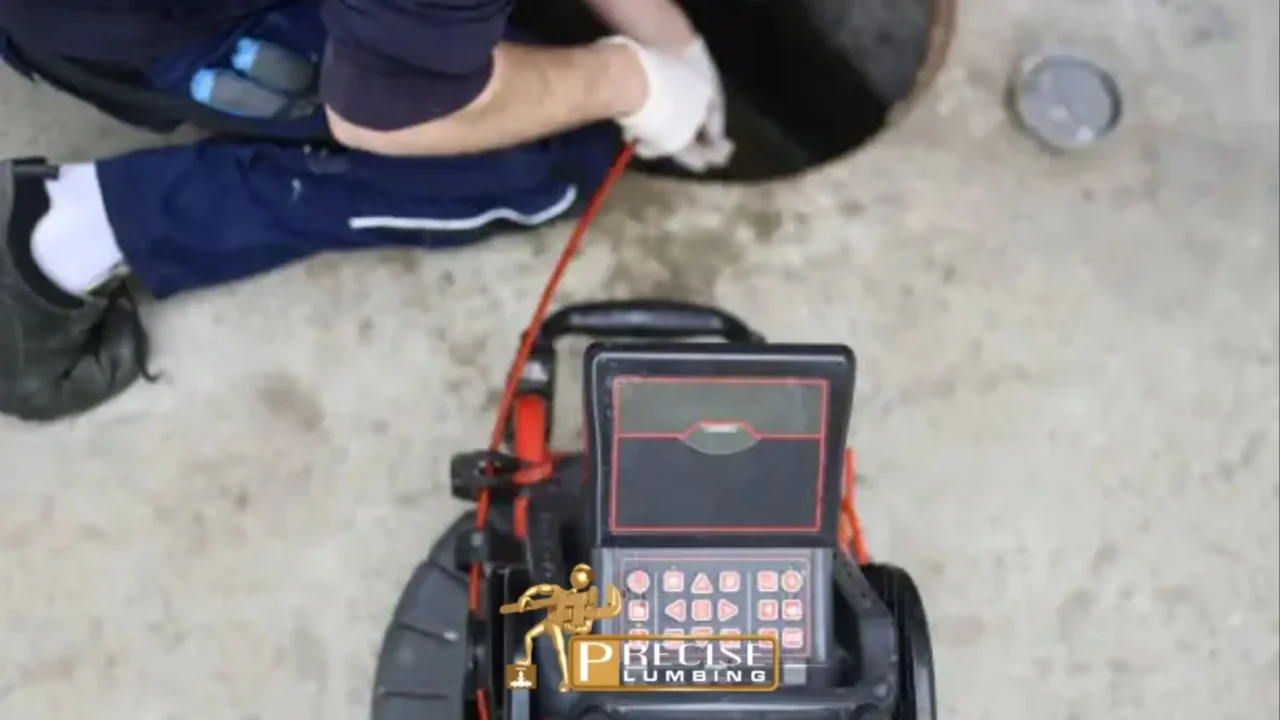
Homeowners often find themselves dealing with recurring drain problems, not fully grasping what’s behind them, which can result in expensive repairs and extended downtime. Dealing with blocked drains, leaking pipes, or slow drainage can be incredibly frustrating, particularly when the issue isn’t immediately apparent. If you have faced any of these issues, you probably know just how harmful undetected plumbing problems can be. Detecting issues early can help prevent them from turning into major plumbing disasters down the line.
This is where drain camera inspections play a significant role. So, how can drain camera inspections help you save money on repairs and make sure your plumbing system lasts a long time? Let’s examine this valuable tool and its numerous benefits.
What is a Drain Camera Inspection?
A drain camera inspection uses specialized cameras, such as sewer line inspection cameras and video drain inspection cameras, to provide a closer look at the condition of your plumbing system. These cameras are designed to navigate your pipes and capture real-time footage of potential issues. A professional plumber then reviews the footage to pinpoint the source of the problem.
Drain camera inspections utilize CCTV drainage technology to transmit a clear video signal to a monitor above ground. This allows plumbers to trace the path of pipes without digging, breaking, or disturbing the surface. The camera easily navigates narrow spaces and provides a close-up view of your pipes’ condition.
Different types of cameras are utilized based on the specific issue at hand. For example, a rooter camera is a high-resolution, waterproof camera that plumbers often use to spot tree root intrusions and check sewer lines for blockages, cracks, and other damage.
Benefits of Drain Camera Inspections
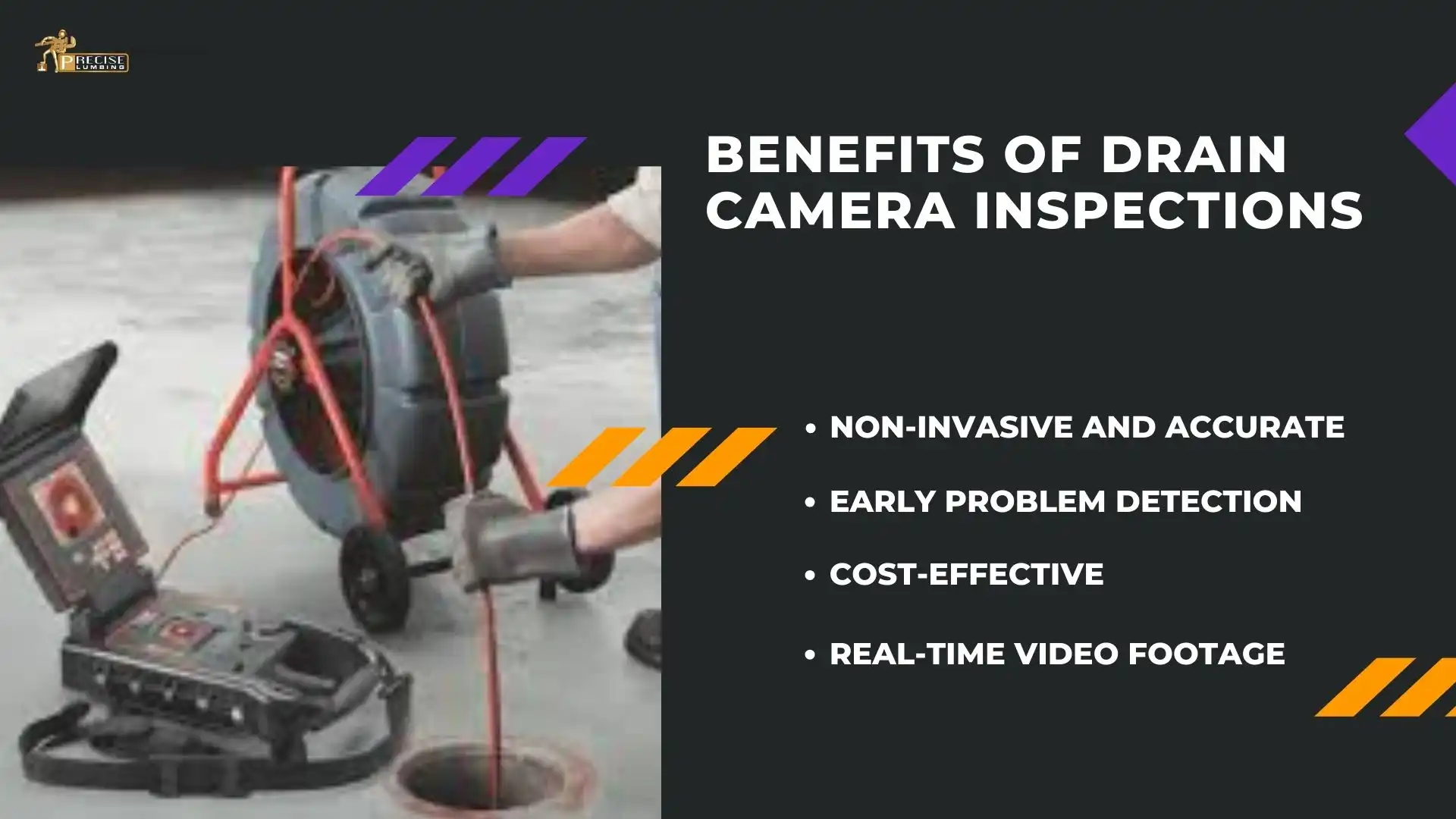
Drain camera inspections have changed the game when it comes to diagnosing and tackling plumbing problems. This technology offers a modern solution to replace older, more invasive methods. Here are some key benefits of using this technology for your plumbing needs:
Non-Invasive and Accurate
Drain camera inspections provide a non-invasive way to figure out plumbing problems. Unlike traditional procedures such as digging or snaking, CCTV drainage inspections cause little interruption to your property. The drainage camera inspection provides plumbers with accurate, real-time footage, allowing them to locate problems without digging up the ground, saving time and money.
Early Problem Detection
Drain camera inspections are effective at detecting problems early, such as tree root infiltration, cracks, and blockages. A video drain inspection can find hidden problems before they cause significant damage. This early detection helps keep your plumbing system safe and prevents expensive repairs.
Cost-Effective
While there is an initial expense for drain camera inspections, they prove to be cost-effective over time. Finding blockages or damage in pipes early with CCTV drain inspections can help homeowners avoid costly repairs. Spotting problems early with a sewer line inspection camera can help you avoid hefty plumbing bills later.
Real-Time Video Footage
Drain camera inspections produce real-time video footage that provides clear insights into plumbing issues. This allows plumbers to rapidly locate the source of the problem and devise the best solution. The footage serves as documentation for both plumbers and homeowners, which ensures transparency and accurate repair suggestions.
How Video Drain Inspections Differ from Traditional Techniques
In the past, inspecting drains typically involved using a snake to navigate the pipes, but this method often missed underlying issues. Using video drain inspection, plumbers can thoroughly examine every part of the pipe, which provides them with a clear, detailed understanding of its condition. This approach allows for real-time visualization and documentation of the issue, which gives insights that manual inspections can’t provide.
Additionally, the documentation gathered during the inspection can be shared with homeowners to allow them to see the issue firsthand and understand the necessary repairs. Picture yourself viewing a clear video of roots weaving through your pipe, or witnessing the grease buildup that’s causing the backup. This kind of transparency fosters trust between homeowners and plumbing experts, turning a confusing, stressful experience into a clear, mutually understood one.
Common Drain Problems Detected by Camera Inspections
Drain camera inspections are essential for identifying various common drain issues. Here are some typical drain problems that CCTV drain inspections can easily detect:
Clogs and Blockages
Clogs and blockages are the most prevalent issues found during drain camera inspections. Blockages, whether caused by food waste, grease buildup, or debris, can impair water flow and lead to backups. A CCTV drainage inspection allows plumbers to identify the exact location and nature of the blockage, which helps them find the most effective solution for the specific issue.
Tree Root Intrusions
Tree root intrusions are another common problem discovered by rooter cameras. Roots from adjacent trees can grow into your pipes, which causes cracks and blockages. This problem can worsen with time and lead to pipe bursts or even complete blockages. Drain camera inspections can easily locate roots, allowing plumbers to remove them before they cause further damage.
Cracked or Collapsed Pipes
Cracked or collapsed pipes can cause leaks that allow water to seep into the ground and potentially damage the foundation of your property. Sewer line inspection cameras are specifically designed to detect these issues, ensuring that any cracks or collapses are repaired before they worsen.
Corrosion and Wear
Corrosion and wear on older pipelines can cause serious problems. Plumbers can use video drain inspections to look for signs of rust or damage, especially in older plumbing systems. Identifying corrosion early enables proactive maintenance, helping prevent expensive replacements in the future.
Step-By-Step Drain Camera Inspection Process
A drain camera inspection is a straightforward, simple process. To help you understand, here are the steps:
Preparation
The plumber prepares the CCTV drainage system and ensures the inspection area is easily accessible. A flexible cable is linked to the camera, which is then inserted into the drain or pipe.
Inspection
The camera is carefully guided through the pipes for drain inspections to capture real-time video footage. The plumber monitors the footage closely as the camera navigates through the pipes and attentively searches for any signs of issues, such as blockages, cracks, or tree root intrusion.
Analysis
Once the inspection is complete, the plumber takes a moment to review the footage and identifies the exact problem. The plumber will then suggest the most suitable steps for repairs, which might include cleaning, replacing pipes, or using special tools to clear tree roots or other blockages.
Documentation
The whole inspection procedure is documented, and homeowners receive a video or report outlining the findings. This helps them clearly grasp the issue at hand and empowers them to make informed decisions regarding repairs.
When to Schedule a Drain Camera Inspection
Scheduling a drain camera inspection is necessary when you detect any of these signs:
- Frequent Clogs: If your drains keep clogging even after you clean them regularly, it might be a sign of a more serious issue that needs your attention.
- Slow Drainage: If your water is draining slowly, it could indicate a partial blockage or damage to the pipes that may worsen over time.
- Unpleasant Odors: Unpleasant odors from your drains can indicate waste accumulation or a potential leak in the pipes.
- Water Backups: When water backs up in your sinks or tubs, it may indicate a severe blockage or issue in the main sewer line.
To keep things running smoothly, it’s recommended to plan for drain camera inspections every 1-2 years. This is especially important for older homes or plumbing systems that haven’t been checked in a while.
Rely on Expertise, Expect Accuracy
Drain camera inspections are an excellent resource for homeowners looking to maintain the long-term health of their plumbing systems. CCTV drain inspections can detect problems such as tree root intrusions, damaged pipes, and blockages early, which saves money on future repairs. These inspections provide plumbers and homeowners with clear, accurate, and transparent information in real-time video footage, which helps them make informed decisions.
Why take the risk of costly repairs when a precise, non-invasive inspection can easily reveal hidden problems? At Precise Plumbing, we utilize advanced camera technology to diagnose your specific issues to ensure that each repair is targeted and effective.
Don’t wait until a minor issue escalates into a major plumbing disaster. Schedule a professional drain camera inspection today to obtain the precise solution your property needs.
Frequently Asked Questions (FAQs)
How much does a camera drain inspection cost?
A drainage camera inspection typically starts at $250 and varies based on factors such as property size, inspection complexity, and location. In rare cases, additional fees may apply for regions that necessitate specialized equipment or more thorough inspections.
How do plumbers find hidden leaks?
Plumbers use CCTV drainage cameras and plumbing camera inspections to locate hidden leaks invisible to the human eye. These cameras enable plumbers to access hard-to-reach areas and detect leaks in walls or underground pipes.
Can a sewer camera detect blockages?
Yes, sewage line inspection cameras have been explicitly designed to detect blockages such as debris, tree roots, and grease accumulation. The camera footage helps plumbers to pinpoint the blockage and perform the necessary procedure to remove it.
How to detect a concealed pipe leak?
Drain camera inspections can detect concealed pipe leaks by delivering real-time video footage of your pipes, allowing plumbers to identify cracks, corrosion, and other signs of leakage that would otherwise go undetected.