

Have you been dealing with a slow-draining sink that won’t get better, no matter what you do? Maybe you notice bad smells or odd gurgling noises that keep returning. These are signs that something is wrong. Every homeowner eventually wonders: Is this something I can fix, or do I need a whole drain pipe replacement? Deciding between repair vs full replacement can feel stressful, especially when the problem keeps coming back.
So, how do you know when to stop trying temporary fixes and look for a long-term solution? The first step is to recognize the signs of plumbing problems. This helps you figure out what’s the smartest choice for your home and your budget. Let’s break down how to decide if your drain just needs a simple repair or if it’s time for a full main line replacement.
Common Signs of Plumbing Problems
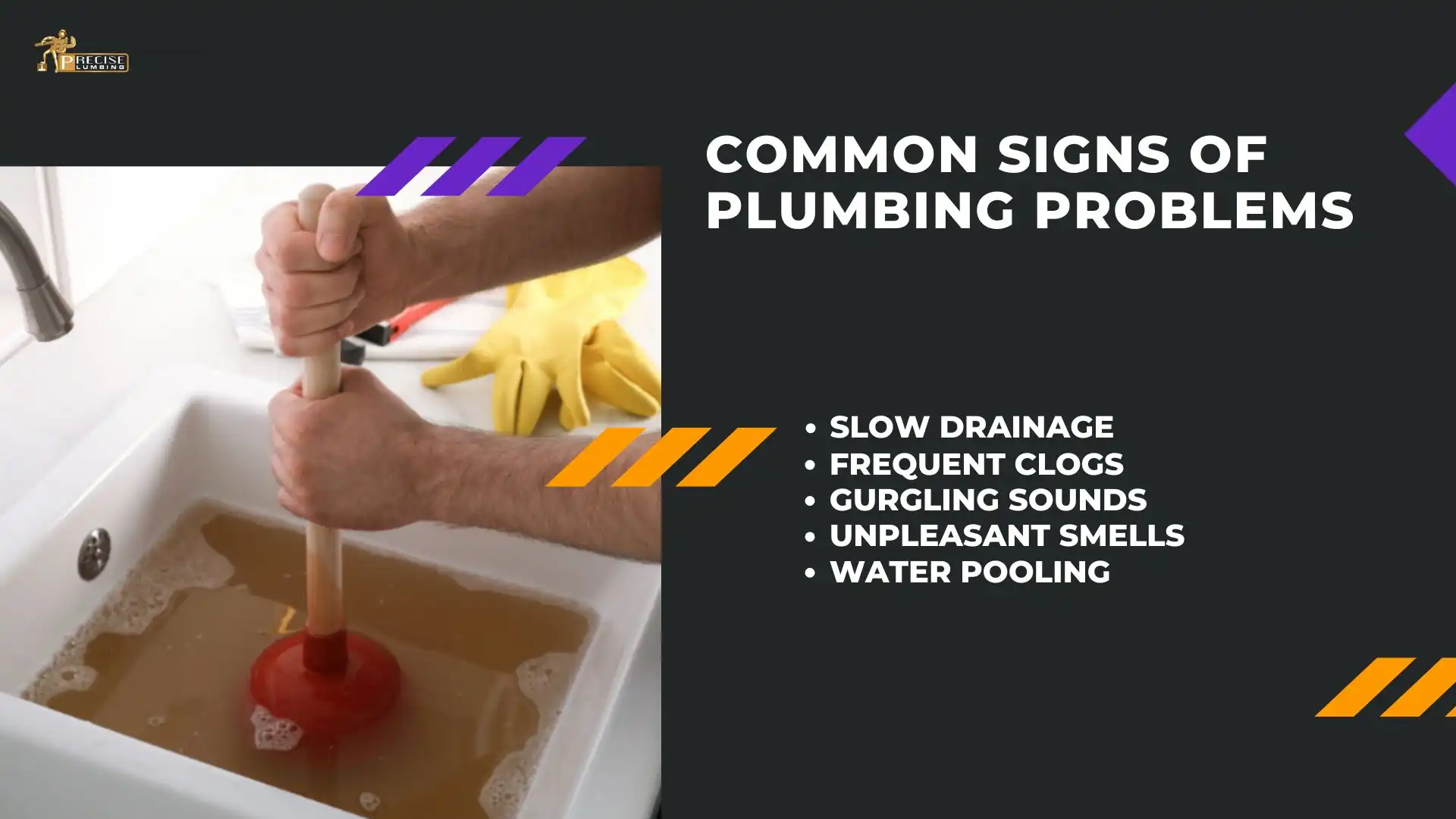
The first step before you decide on repair vs replacement is knowing what signs to watch for. Here are some common signs of plumbing problems that signal trouble:
- Slow Drainage: When water drains more slowly than usual, it may indicate a partial blockage or internal pipe damage.
- Frequent Clogs: If you keep needing to use the plunger on the same drain, the problem is probably more serious than just debris buildup.
- Gurgling Sounds: Strange noises from your pipes often indicate that air is trapped in the system, which could be a warning sign of a collapsed drain.
- Unpleasant Smells: If you notice persistent bad odors that won’t go away, it might mean food, grease, or waste is trapped and decomposing in your lines. This can lead to bigger issues over time if not fixed.
- Water Pooling: If you find puddles in your yard or basement and don’t know where they came from, it could be a sign of a collapsed drain or a major pipe break.
Even if these problems seem minor at first, they often indicate more serious plumbing issues, such as pipe damage, that require a professional to fix.
What Are Collapsed Drains?
A collapsed drain occurs when a section of your pipe gives way; it can cave in, crack, or break completely due to external pressure. This blocks wastewater and causes major drainage problems.
A collapse can be sudden or develop slowly over time. It usually results from a combination of factors, including old, weak pipe materials, shifting soil, the immense pressure from tree root growth, or simply the wear and tear of decades of use.
How to Assess the Condition of Your Drain
To decide between a repair vs replacement, start by checking for the signs of plumbing problems we discussed earlier. A quick visual inspection can help you see if the issue is minor or more serious. Here’s what to watch for:
- Puddles or Wet Areas: If you notice unexplained damp areas in your yard or basement that you can’t explain, it could mean there’s a leaking pipe or a collapsed drain.
- Cracks or Holes: When you see exposed pipes, look for visible cracks, bulges, or heavy corrosion. These are signs of weakening that may require a drain pipe replacement.
- Leaks: Look for any moisture or dripping around pipe joints. Even a small leak can indicate damage that should be repaired soon to avoid bigger plumbing issues.
A visual inspection is a good place to start, but it has limits. For a true diagnosis, a professional plumber uses a camera inspection to see the exact condition inside your pipes, giving you a clear picture of whether a repair or a full main line replacement is needed.
Repair Options for Collapsed Drains
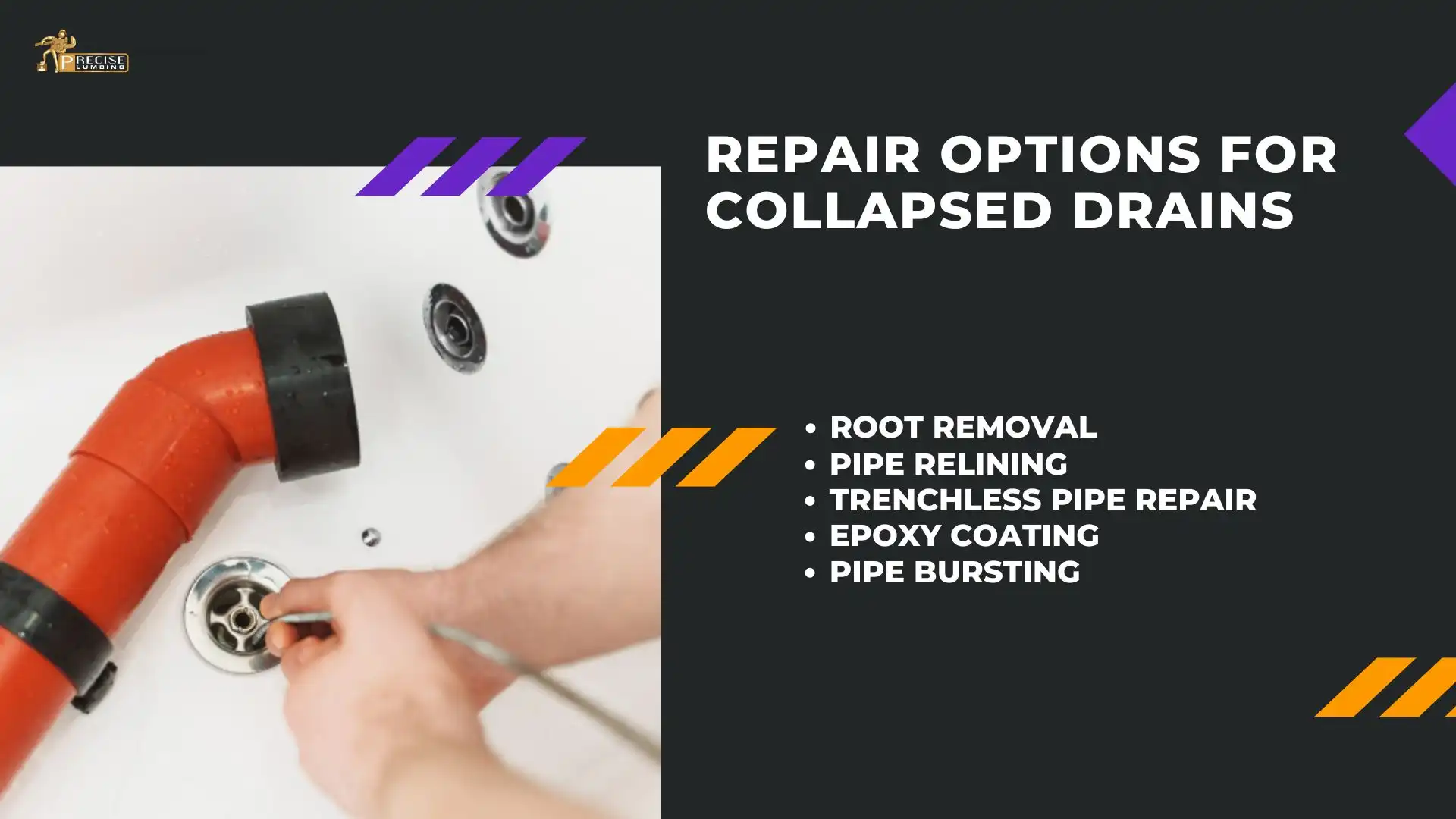
Here are some common repair techniques used by professional plumbers to address a collapsed drain:
Root Removal
If tree roots are causing the problem, the first step is to clear the blockage. Plumbers use specialized tools or hydro jetting to cut through and remove the roots. This restores flow and helps prevent more damage right away.
Pipe Relining
If the pipe is still mostly intact but has cracks, pipe relining is a good solution. A flexible liner coated with resin is inserted into the old pipe and inflated. Once it hardens, it forms a smooth, jointless new layer inside the pipe, sealing cracks and making it strong again.
Trenchless Pipe Repair
Trenchless pipe repair includes methods like relining and pipe bursting. It only needs small access holes, so there’s no need for large digging. This approach repairs or replaces pipes with much less mess and disruption to your property.
Epoxy Coating
For pipes with small cracks or leaks, epoxy coating is a focused fix. Plumbers spray a two-part epoxy resin inside the pipe, where it hardens to create a strong, seamless barrier. This seals the damage and helps prevent future corrosion.
Pipe Bursting
If a pipe is too damaged for relining and you want to avoid digging a trench, pipe bursting is another option. A special head is pulled through the old pipe, breaking it apart while pulling a new, stronger pipe into place.
Costs and Timeframes for Repair
The cost of repairing a collapsed drain varies widely, depending on the extent of damage and its location. Generally, minor repairs cost around $150, while more complex jobs, such as extensive root removal or trenchless methods, can cost $2,000 or more.
The time needed for repairs also varies. Simple fixes can take just a few hours, but bigger jobs like pipe relining or pipe bursting may take a full day or longer to complete.
Key Differences Between Repair vs Full Replacement
If you need to decide whether to repair or replace your drain, it’s essential to know the main differences between these two choices:
Cost
The collapsed drain repair cost for a localized fix is typically lower upfront than a full main line replacement. However, if your system is old or failing in multiple places, the cost of repeated repairs can add up. In that case, investing in a main drain replacement often proves more economical over time.
Longevity
A repair, like pipe relining, can extend the life of a specific section for decades. But if the rest of your plumbing system is aging, new problems will likely arise elsewhere. A full drain pipe replacement offers a comprehensive, long-term solution, essentially resetting the clock on your plumbing for 50 years or more.
Disruption
Repairs, especially trenchless pipe repair methods, are designed to be minimally invasive, causing little to no damage to your yard or home. A full home pipe replacement project is more disruptive, often requiring excavation, but it’s a one-time major project that provides a lasting solution.
Drain Repair vs. Full Replacement Scenarios
Choosing between a repair vs replacement hinges on how severe the damage is. Here’s a breakdown of when each option is typically the right call:
Drain Repair Scenarios
- Minor leaks or cracks: Small, isolated issues can usually be fixed with epoxy coating or pipe relining.
- Blocked drains: Clogs caused by grease or small tree roots can often be cleared with professional drain cleaning or root removal.
- Localized damage: If there’s just one cracked joint or a small corroded area, you can usually repair it without replacing the whole line.
Full Replacement Scenarios
- Severely Damaged Pipes: When pipes are badly corroded, badly cracked, or have a collapsed drain, a full drain pipe replacement is necessary.
- Recurring Issues: If you experience recurring plumbing issues and repairs in different areas, your system may be failing. A main line replacement is often the most reliable long-term solution.
- Outdated Systems: If your pipes are made of old clay, cast iron, or Orangeburg and are over 40 years old, they are prone to failure. Proactively opting for a main drain replacement prevents future emergencies and provides lasting reliability.
Finding the Right Option for Your Home: Repair vs Replacement
When deciding whether to repair or replace, consider these important questions:
- How old are the pipes? If your plumbing is over 40 years old, the entire system is likely wearing out. In this case, a main line replacement is often a more reliable and cost-effective long-term solution than repeated patches.
- How extensive is the damage? A small, isolated leak might be repairable. However, significant cracks, widespread corrosion, or a collapsed drain typically mean a section or the entire line needs a drain pipe replacement.
- Is it a recurring issue? If you’re constantly fixing the same slow drain or clog, it’s a sign of a deeper problem. In these cases, investing in a main drain replacement can be more cost-effective than endless temporary repairs.
- What is the long-term goal for your home? Consider your future plans. If you intend to stay in the home for many years, a full home pipe replacement provides lasting reliability and can add value. If you need a shorter-term solution, a professional repair might be the more practical and economical choice.
Take the Next Step for a Reliable Drain System
Deciding between a repair vs replacement is a critical choice that depends on the true condition of your pipes. While repair options like relining are ideal for isolated damage, a full drain pipe replacement becomes necessary for severe corrosion, collapsed drains, or aging systems prone to constant plumbing issues.
A professional assessment is key to making the right decision. An expert can diagnose whether you need a targeted fix or a complete main line replacement, ensuring your home’s plumbing remains reliable for years to come.
Trust the experienced team at Precise Plumbing to provide an honest, accurate assessment and recommend the most effective and cost-efficient path forward, whether it’s a precise repair or a full replacement.
Frequently Asked Questions (FAQs)
How do you know if your pipes are bad?
You might have failing pipes if you experience frequent leaks, low water pressure, or recurring clogs. Other warning signs include unusual banging noises, musty smells, or unexplained damp spots on walls or floors.
How often do sewer lines need to be replaced?
A main sewer line typically lasts 40 to 60 years. Its lifespan depends heavily on the pipe material (clay, cast iron, PVC) and soil conditions. If you’re experiencing recurring plumbing issues, such as backups, it’s a strong indication that a main line replacement may be needed sooner.
How often do pipes need to be replaced?
This varies by material. Cast iron or galvanized steel pipes often need home pipe replacement every 50 years. More durable materials, such as copper or PVC, can last 70+ years. Watch for signs like persistent leaks, rust-colored water, or a drop in water pressure to gauge their condition.
How often should plumbing be replaced?
There’s no single timeline for a whole-house replace pipes in house project. However, if your system is over 40 years old and you’re dealing with signs of plumbing problems in multiple areas, a full replacement is usually more affordable than endless repairs. Regular professional inspections are the best way to plan proactively.